Meta's Infrastructure Play vs. Anthropic's Funded Ambition: Two AI Strategies Diverge
Meta is betting on hardware independence through custom ARM processors, while Anthropic is securing massive Google funding to compete in model development. These divergent strategies reveal competing philosophies about winning the AI race—one focused on computational autonomy, the other on capital-backed innovation.

Meta's Infrastructure Bet vs. OpenAI's Scaling Crisis: Diverging AI Strategies
Meta is doubling down on hardware independence and talent retention through aggressive infrastructure investments, while OpenAI grapples with fundamental scaling limitations and internal governance challenges. These contrasting trajectories reveal two fundamentally different bets on how to win the AI race.

OpenAI's Model Dominance vs. Google's Strategic Billions: Two Paths to AI Leadership
While OpenAI pushes technical boundaries with GPT-5.5's benchmark performance, Google is betting massive capital on Anthropic to reshape competitive dynamics through strategic infrastructure control. Both approaches reflect fundamentally different philosophies about winning the AI race.
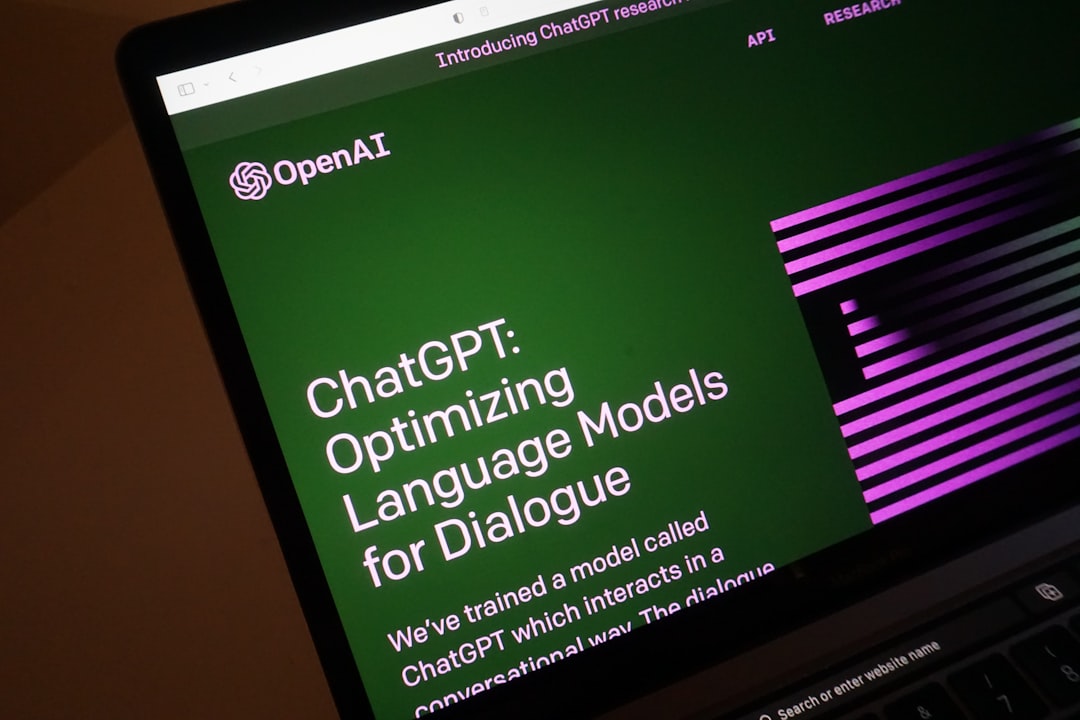
OpenAI vs Anthropic: Safety Crises and Capability Milestones Diverge
While OpenAI grapples with public accountability failures and pricing pressures, Anthropic is advancing autonomous AI agent capabilities—but both face critical questions about safety, transparency, and real-world deployment readiness. The contrasting headlines reveal two companies at inflection points, each exposing different vulnerabilities in the rapidly scaling AI industry.

Terra API Expands Health AI Team With Applied Intelligence Role
Terra API, a Y Combinator-backed health data platform, is actively recruiting an Applied AI Strategist to lead health intelligence initiatives. The hire signals the company's pivot toward deeper AI integration in clinical data processing and predictive health analytics.

GPT-5.5 Reclaims Benchmark Crown—But Hallucinations and 20% Price Hike Complicate ROI
OpenAI's latest model dominates standard AI benchmarks, yet persistent hallucination issues and elevated API pricing raise questions about real-world production viability. Engineers weighing migration paths need to understand the tradeoffs between benchmark performance and operational reliability.

Developer Hiring Growth Plummets 50% Post-ChatGPT, Federal Reserve Data Shows
A Federal Reserve analysis reveals programmer job growth has declined dramatically since ChatGPT's November 2022 launch, signaling potential workforce restructuring in software development. The data suggests generative AI tools are fundamentally altering hiring patterns and labor demand in the tech sector.

Alibaba's Qwen3.6-27B Outperforms 400B+ Model on Code Generation Tasks
Alibaba has released Qwen3.6-27B, a 27-billion parameter open-source model that achieves superior performance on coding benchmarks compared to its significantly larger predecessor. This efficiency breakthrough suggests that architectural innovations and training methodologies can overcome raw parameter count in specialized domains like code generation.

Anthropic's Marketplace Experiment Reveals AI Model Capability Gaps in Negotiation
Anthropic deployed 69 AI agents in an internal trading marketplace and discovered that stronger models consistently negotiated better deals—while users paired with weaker models remained unaware of the performance disparity. The findings raise critical questions about fairness and transparency in AI-mediated transactions at scale.

UAE's 2-Year Push to Automate 50% of Government with Agentic AI
The United Arab Emirates is implementing an aggressive timeline to deploy autonomous AI agents across half its government operations by 2028. This represents one of the most ambitious large-scale deployments of agentic AI systems in the public sector to date.

OpenAI's GPT-5.5 Shifts to Agentic Architecture at 2x API Cost
OpenAI has released GPT-5.5, positioning it as a fundamentally different class of intelligence built around autonomous task execution and multi-tool orchestration. The new model doubles API pricing, signaling a strategic pivot toward agent-based workflows over traditional completion-based inference.

Google's $40B Anthropic Bet: What It Means for AI Infrastructure
Google is committing up to $40 billion to Anthropic, bringing the AI safety-focused startup's total funding to $65 billion when combined with Amazon's $25 billion pledge. This massive capital injection signals a strategic shift in how tech giants are competing in the large language model space.

Google's $40B Anthropic Bet: Reshaping the AI Competitive Landscape
Google is committing up to $40 billion to Anthropic, signaling an aggressive pivot in its AI infrastructure strategy and competitive positioning against OpenAI. This massive capital injection comes mere days after Amazon's comparable investment, intensifying the race to secure cutting-edge AI capabilities and talent.
OpenAI's Chief Scientist Signals Inflection Point Ahead for AI Scaling
OpenAI chief scientist Jakub Pachocki characterizes recent AI capability gains as "surprisingly slow," suggesting the industry has hit a plateau in current scaling approaches. With GPT-5.5 now released, leadership is signaling that fundamental breakthroughs in model architecture and training methodologies are imminent.

Samsung's Smartphone Margin Collapse: When AI Demand Starves Consumer Hardware
Samsung executives face an unprecedented crisis as surging AI infrastructure demand for memory chips threatens to push the company's smartphone division into loss-making territory for the first time. The memory supply crunch is forcing difficult allocation decisions that pit high-margin data center orders against consumer electronics.

AI-Generated Wildlife Hoax Triggers Federal Charges and Legal Precedent
A man now faces up to five years in federal prison after using generative AI to fabricate photographic evidence of an escaped wolf, creating a nationwide manhunt that consumed resources and public attention. The case marks a significant legal inflection point for synthetic media crimes and raises urgent questions about AI detection, verification infrastructure, and liability in the age of convincing deepfakes.

China Tightens Capital Controls on US Funding for Tech Firms
Beijing is implementing stricter oversight mechanisms requiring government approval before Chinese technology companies can accept US investment, marking an escalation in tech sector regulation. This move reflects deepening geopolitical tensions and represents a significant shift in how cross-border AI and tech funding will operate.
Meta's Massive Graviton 5 Bet Signals ARM Shift for AI Infrastructure
Meta is committing to tens of millions of AWS Graviton 5 processor cores, positioning itself as one of the world's largest customers for Amazon's custom ARM-based silicon. This move reflects a broader industry pivot away from x86 dominance in AI workload processing.
